


Key Factors Affecting Cutting Parameters in Machining
Selecting the correct cutting parameters is one of the most important factors in achieving stable, productive, and cost-effective machining.
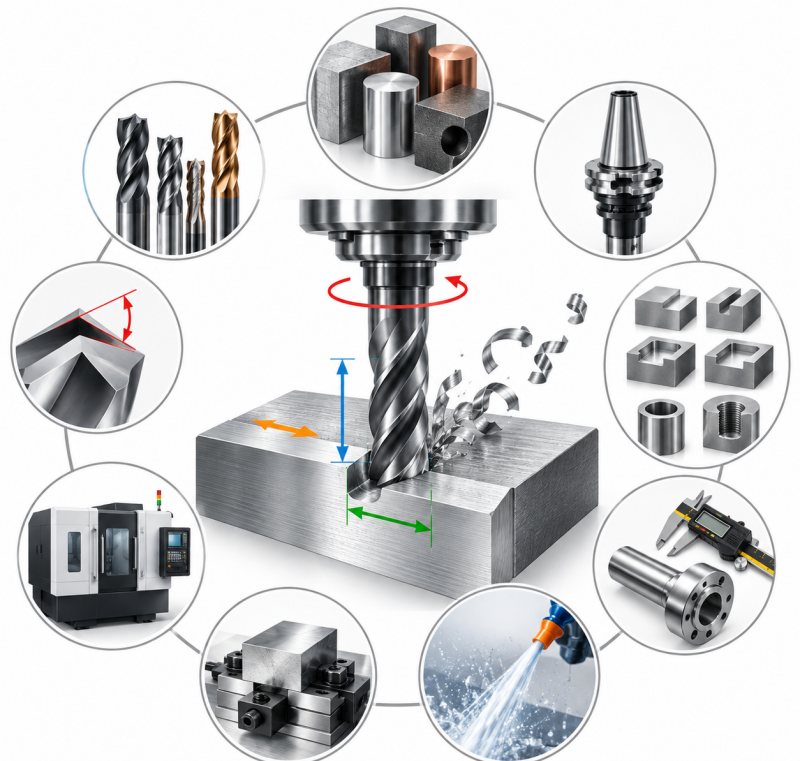
Cutting parameters determine not only how quickly material can be removed, but also influence tool life, surface finish, dimensional accuracy, cutting forces, heat generation, machine stability, and overall production cost.
There is no single cutting condition that is suitable for every application. The optimum parameters depend on the interaction between the workpiece material, cutting tool, machine tool, workholding system, machining operation, and required component quality.
What Are Cutting Parameters?
In machining, cutting conditions are generally defined by several fundamental parameters:
Cutting Speed (Vc)
Cutting speed is the relative speed between the cutting edge and the workpiece surface, normally expressed in m/min.
It has a significant influence on cutting temperature and tool life. Increasing cutting speed can improve productivity, but excessive speed may accelerate tool wear or cause premature tool failure.
Spindle Speed (n)
Spindle speed is the rotational speed of the tool or workpiece, expressed in revolutions per minute (RPM).
For rotating tools, spindle speed can be calculated from cutting speed and tool diameter:
n = (1000 × Vc) / (π × D)
where:
Vc = cutting speed (m/min)
D = tool diameter (mm)
n = spindle speed (RPM)
Feed Rate (F)
Feed rate determines how quickly the cutting tool advances through the workpiece.
Depending on the machining operation, feed may be expressed as mm/rev, mm/tooth, or mm/min.
For milling:
F = fz × z × n
where:
fz = feed per tooth (mm/tooth)
z = number of cutting edges
n = spindle speed (RPM)
Depth of Cut (ap)
Depth of cut represents the amount of material removed in the axial direction during a cutting pass.
Increasing the depth of cut can improve material removal rate, but it also increases cutting forces and the load applied to the tool, workpiece, spindle, and machine structure.
Width of Cut (ae)
Width of cut represents the radial engagement between the cutting tool and workpiece.
In milling applications, the combination of ap and ae has a major influence on tool engagement, chip thickness, cutting forces, heat generation, and machining stability.
Major Factors Affecting Cutting Conditions
1. Workpiece Material
Workpiece material is one of the primary considerations when selecting cutting parameters.
Different materials have different levels of hardness, strength, toughness, thermal conductivity, abrasiveness, and work-hardening behavior.
For example, the appropriate cutting conditions for aluminum can be very different from those used for carbon steel, stainless steel, hardened steel, cast iron, or heat-resistant alloys.
Even materials within the same general group may require different parameters depending on their grade, hardness, heat treatment, and microstructure.
2. Cutting Tool Material and Coating
The cutting tool must be suitable for both the workpiece material and machining conditions.
Common cutting tool materials include HSS, carbide, coated carbide, cermet, ceramic, CBN, and PCD.
Tool coatings can further improve wear resistance, heat resistance, lubricity, and cutting-edge performance.
A high-performance tool material may allow significantly higher cutting speeds than a conventional tool, but only when the machine and machining conditions can support those parameters.
3. Tool Geometry
Cutting-edge geometry directly affects chip formation, cutting forces, heat generation, vibration, and surface quality.
Important characteristics include rake angle, clearance angle, helix angle, cutting-edge preparation, chipbreaker geometry, nose radius, and the number of cutting edges.
The correct geometry should therefore be selected according to the material and machining application rather than simply using the same tool geometry for every operation.
4. Machine Rigidity and Performance
Recommended cutting data should always be considered together with the capabilities of the machine tool.
Spindle power, maximum RPM, machine rigidity, spindle condition, tool interface, axis stability, and machine age can all affect the cutting parameters that can realistically be used.
A cutting condition that performs well on a rigid machining center may not produce the same result on a less rigid machine.
5. Tool and Workpiece Clamping
A stable machining system is essential for consistent performance.
Excessive tool overhang, insufficient clamping force, poor workholding, or excessive runout can cause vibration and unstable cutting.
This may result in poor surface finish, dimensional variation, abnormal tool wear, or tool failure even when the theoretical cutting parameters are correct.
6. Machining Operation
Cutting conditions must also be adjusted according to the machining strategy.
Roughing generally prioritizes productivity and material removal rate.
Finishing places greater emphasis on dimensional accuracy and surface quality.
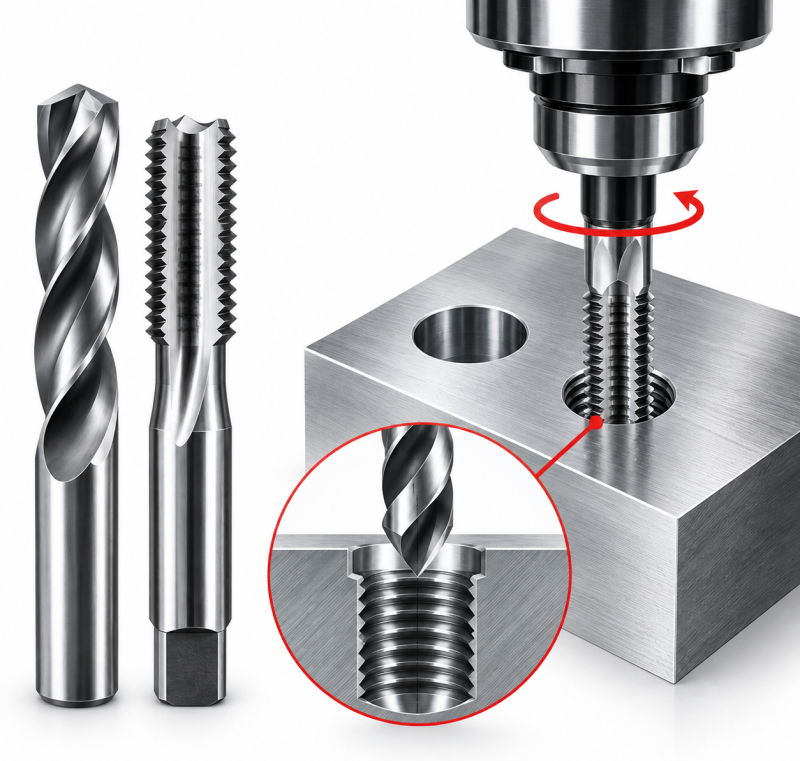
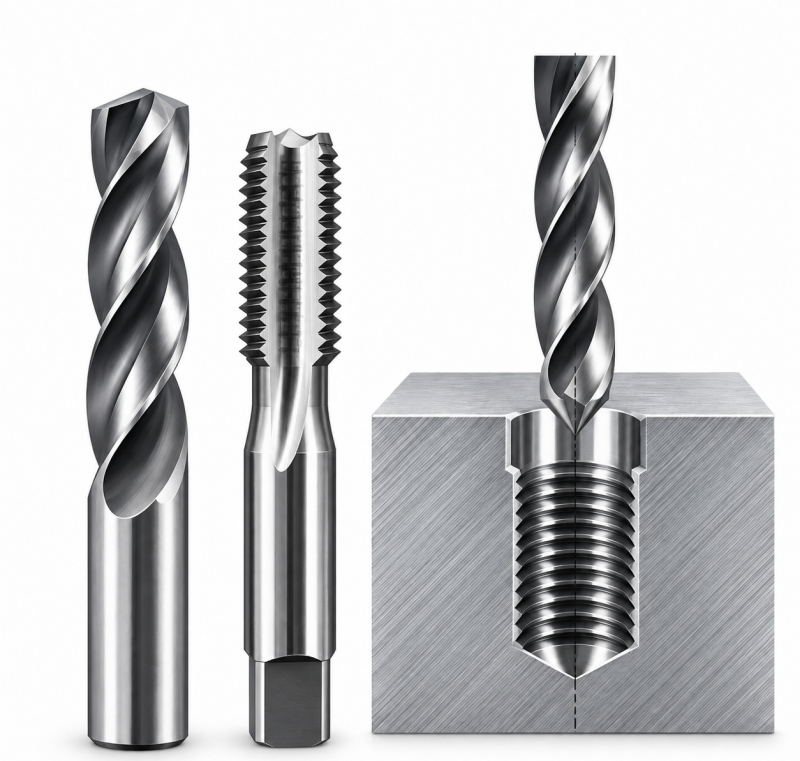
Slotting, side milling, face milling, pocketing, drilling, tapping, turning, and other operations also create different levels of tool engagement and cutting load.
Therefore, the same cutting tool may require very different parameters depending on how it is being used.
7. Coolant and Cutting Environment
Coolant conditions can influence cutting temperature, chip evacuation, lubrication, surface finish, and tool life.
Depending on the tool and workpiece material, machining may be performed with flood coolant, through-tool coolant, minimum quantity lubrication (MQL), air blast, or dry cutting.
The selected method should match both the tool manufacturer's recommendations and the requirements of the machining application.
Finding the Right Cutting Parameters
Cutting data provided in catalogs should normally be considered a recommended starting point, not an absolute value for every machining situation.
A practical approach is to begin within the recommended cutting range and then optimize the parameters according to actual machining results.
Tool wear, chip formation, spindle load, vibration, machining sound, dimensional accuracy, and surface finish can all provide valuable information when adjusting the process.
The objective is not simply to achieve the highest possible cutting speed.
The better objective is to establish a stable machining process that delivers the required quality, productivity, and predictable tool life.
PREX Technical Support
At PREX, we believe cutting tools perform best when the tool, application, and cutting conditions are considered as one complete machining system.
Our technical approach focuses on helping customers select appropriate tooling and practical cutting parameters for real machining conditions.
Premium · Performance · Precision
PREX — Reliable Precision Tooling