


Helical Thread Inserts – Installation, Applications & Drill Size Guide
What Is a Helical Thread Insert?
A helical thread insert, also known as a wire thread insert, is a precision-formed wire insert designed to create or restore a strong internal thread in a component.
Its helical construction resembles a tightly wound spring. Once installed into a specially prepared tapped hole, the insert provides an internal thread corresponding to the required screw or bolt size.
Helical thread inserts are commonly manufactured from stainless steel, providing good corrosion resistance, durability, and wear resistance.
They are widely used both for thread repair and for creating durable threaded connections in new components.
Why Use a Thread Insert?
Repeated assembly and disassembly can gradually damage internal threads, particularly in softer materials such as aluminum and other light alloys.
Installing a helical thread insert can provide a durable threaded interface and extend the service life of the component.
Typical applications include:
- Repairing stripped or damaged internal threads
- Reinforcing threads in softer materials
- Components requiring frequent assembly and disassembly
- Machinery and production-line maintenance
- Mold and die manufacturing
- Automotive components and equipment
- Electrical and mechanical equipment
- Aerospace and other precision engineering applications
Thread inserts can therefore be useful not only for repairing damaged components but also as part of the original component design.
Special Taps for Helical Thread Inserts
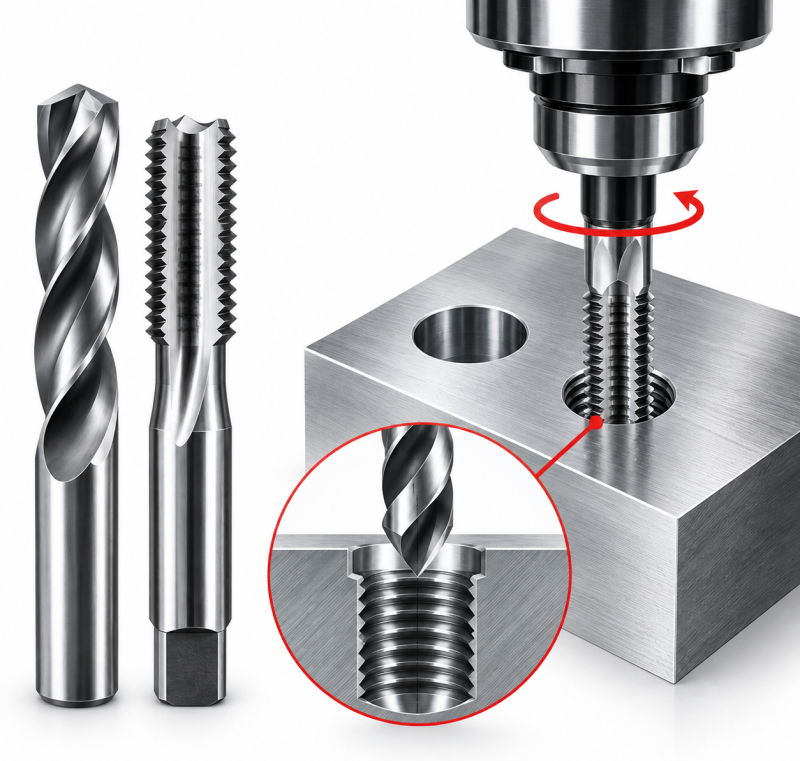
A standard metric tap should not normally be used to prepare the installation thread for a wire thread insert.
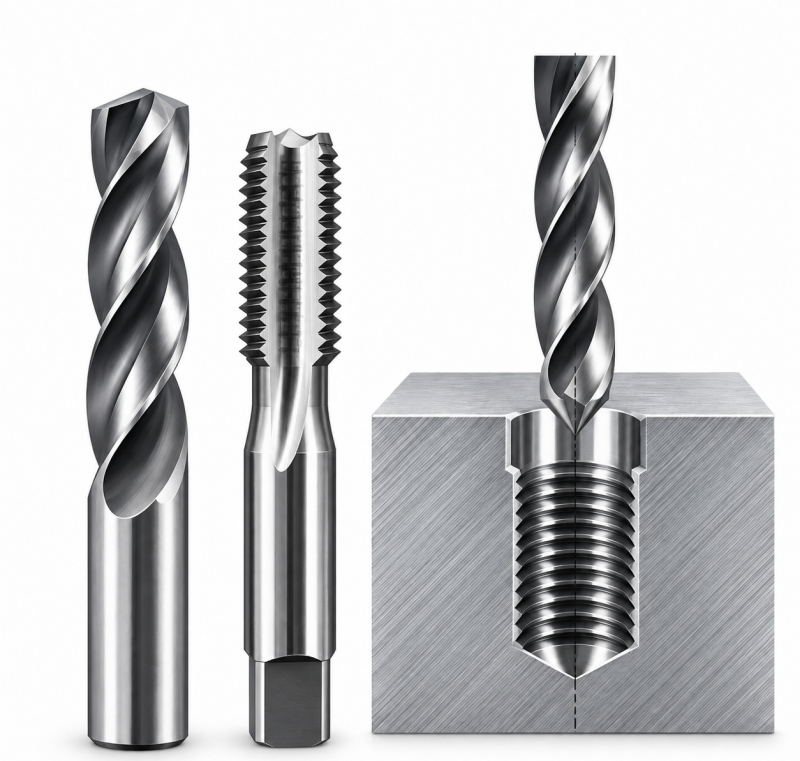
A dedicated STI tap (Screw Thread Insert tap) is used to produce the special oversized thread required to accept the insert.
For example, when installing an M6 × 1.0 insert, the final internal thread after installation is M6 × 1.0, but the tapped hole used to hold the insert is larger than a conventional M6 × 1.0 tapped hole.
This is why the correct combination of drill, STI tap and insert must be selected.
Basic Installation Process
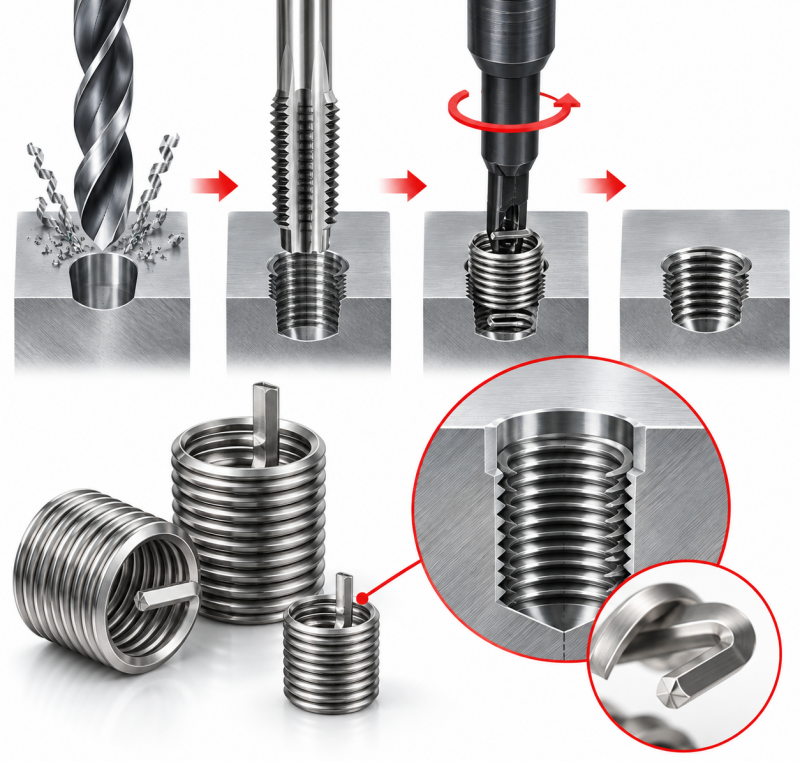
A typical installation procedure consists of four main operations:
Drill → Tap → Install → Finish
First, drill the damaged or prepared hole to the specified diameter.
Next, use the correct STI tap to create the installation thread.
The wire thread insert is then installed into the prepared hole until it reaches the specified position.
After installation is completed, the internal thread is ready to accept the corresponding standard fastener.
Understanding Insert Length
Thread inserts are commonly specified according to their installed length relative to the nominal thread diameter D.
For example, an M6 insert may be available in:
1D = 6 mm
1.5D = 9 mm
2D = 12 mm
2.5D = 15 mm
3D = 18 mm
Longer inserts provide a greater thread engagement length, but the appropriate length should be selected according to the component design, available material thickness, load requirements, and application.
Common Metric Thread Insert Sizes
Frequently used metric sizes include:
M3 × 0.5
M4 × 0.7
M5 × 0.8
M6 × 1.0
M8 × 1.25
M10 × 1.5
M12 × 1.75
Larger sizes are also available for industrial repair and manufacturing applications.
Selecting the Correct Drill Size
The drill diameter used before STI tapping is different from the normal tap-drill diameter used for a standard metric internal thread.
For example, a conventional M6 × 1.0 tapped hole commonly starts with approximately a 5.0 mm drill. A hole prepared for an M6 × 1.0 wire thread insert requires a larger diameter because the STI tap must create the oversized installation thread.
For this reason, always select the drill diameter according to the specific thread insert system and STI tap manufacturer's technical data.
Important Technical Note
Do not select the installation drill based only on the final thread designation.
Three components must be matched correctly:
Recommended Drill Size → STI Tap → Thread Insert
Using an incorrect drill diameter can result in excessive tapping load, poor insert retention, incorrect thread geometry, or installation failure.
The insert type should also be considered, as installation requirements may differ between tang-type, tangless, free-running, and screw-locking inserts.
PREX Technical Support
Correct thread repair requires more than selecting an insert with the same nominal thread size.
The workpiece material, hole condition, drill diameter, STI tap, insert length, installation method, and required thread performance should all be considered as part of the complete process.
PREX provides tooling solutions and technical references for drilling, threading, milling, turning, tool holding and precision machining applications.
Premium · Performance · Precision
PREX — Reliable Precision Tooling